I kept a record of the media I consumed in the course of one typical day in a media diary. I expected most of my media consumption to be sports and entertainment related, but paying closer attention made me realize how often I come across information that I normally accept without really questioning it.
9:30 a.m. – X and Sports Betting
I woke up around 9:30 and almost immediately checked X on my phone. A lot of the content I look at on X is sports related, especially sports betting. I looked through different picks and ended up taking the over on the Cubs game.
One of the accounts I came across was Betting Intel, which reposts picks from different sports bettors along with their records and statistics. One post showed a bettor’s Cubs/Reds over pick along with records such as “15-10 MLB overs.”
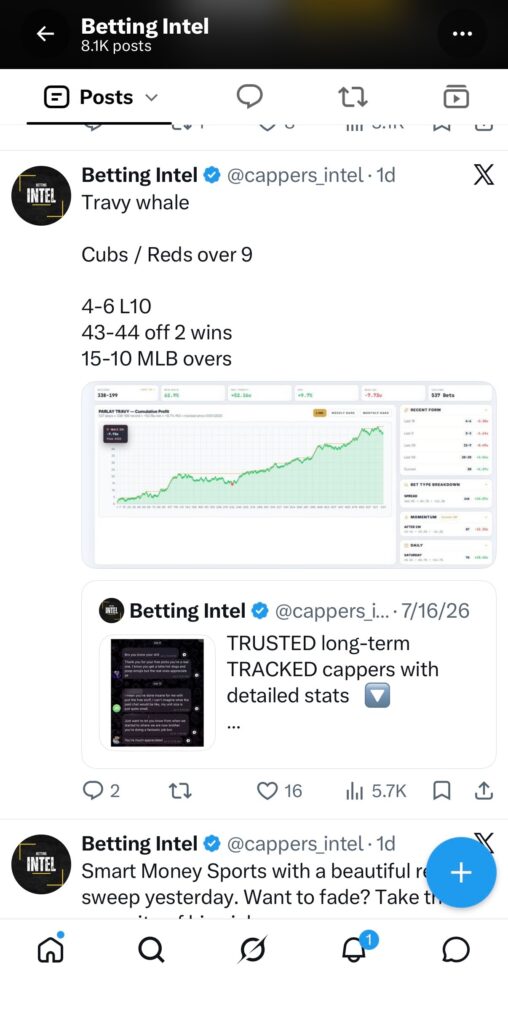
This was one of the first examples of questionable information I noticed. It isn’t necessarily misinformation, but there is a credibility issue because I am trusting that the records and statistics shown in the post are accurate. Normally, I would see a good record and use that as part of deciding whether I like a bet without researching how the record was calculated. A winning percentage also doesn’t guarantee that the person’s next prediction will be correct.
10:00 a.m. – Instagram
After checking X, I spent about 30 minutes scrolling through Instagram. My algorithm is extremely sports-heavy. I saw baseball posts, college football content, fantasy football information and sports betting advertisements.
One thing that stood out was an advertisement from Fanatics Sportsbook advertising “up to $1,000 matched in FanCash.”
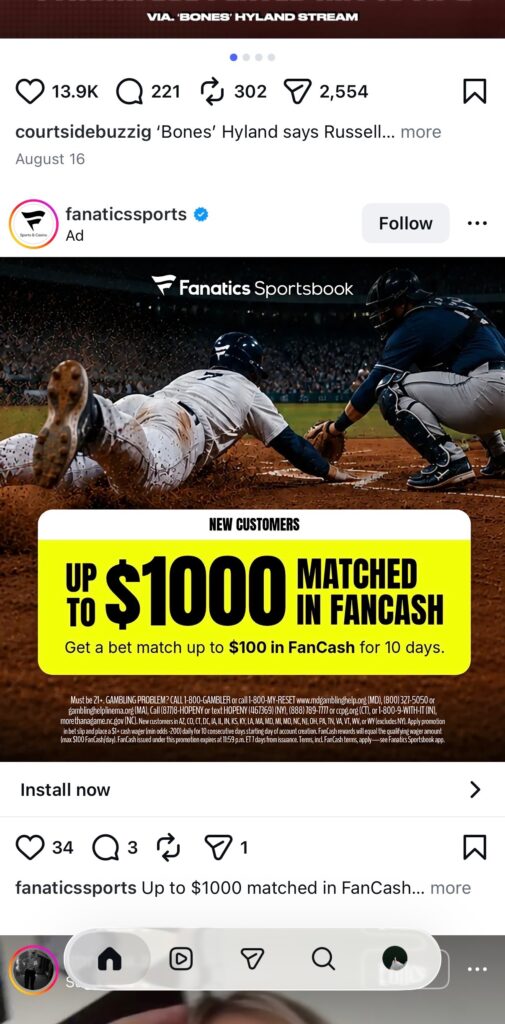
At first glance, “$1,000 matched” sounds almost like a customer is simply being given $1,000. However, the advertisement itself says it is a bet match of up to $100 in FanCash for 10 days. I looked further into how FanCash works. According to Fanatics’ terms, FanCash isn’t simply the same thing as receiving $1,000 in withdrawable cash. FanCash has specific redemption rules and cannot simply be redeemed directly for cash.
This doesn’t mean the advertisement is false, but it showed me why reading beyond the largest words in an advertisement is important. The “$1,000” is designed to grab your attention.
11:00 a.m. – Walmart and the Gym
I went to Walmart to buy an energy drink and laundry detergent and then went to the gym. I wasn’t consuming much media during this period besides occasionally checking my phone and listening to music.
1:30 p.m. – TikTok and Email
After the gym, I went home, showered and made two burgers. While eating and relaxing, I scrolled through TikTok. Like Instagram, a lot of what TikTok recommends to me is sports, fitness, humor and other entertainment content. I also checked my email afterward. I realized that short-form apps are probably where I pay the least attention to credibility because I am scrolling quickly rather than stopping to investigate every claim I see.
3:00 p.m. – Wii Bowling
I played a few games of Wii Bowling. This was entertainment media, but unlike social media, there wasn’t really information being presented to me that I needed to determine was credible.
4:00 p.m. – Fantasy Football Research
I spent about an hour researching fantasy football rankings because I was preparing to draft my fantasy team. One of the resources I looked at was ESPN’s 2026 Fantasy Football Draft Kit.
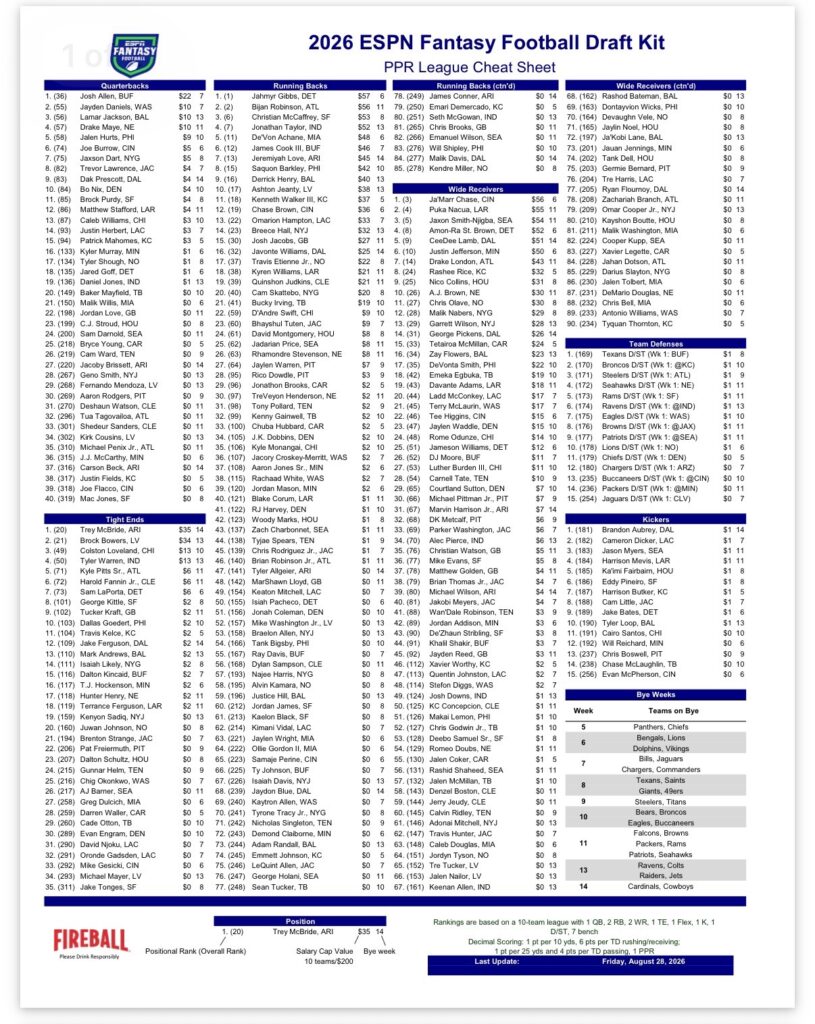
Fantasy rankings are another interesting example of information that can look more factual than it really is. The rankings give players exact positions, but they are ultimately predictions about what will happen during the upcoming season. Injuries, playing time and unexpected performances can completely change them. Because of that, I compared information rather than assuming one ranking sheet could tell me exactly who would be best.
6:00 p.m. – Fantasy Football Draft
After researching players, I drafted my fantasy football team. During the draft I continued looking at rankings and player information when deciding who to select.
7:30 p.m. – Deadpool & Wolverine
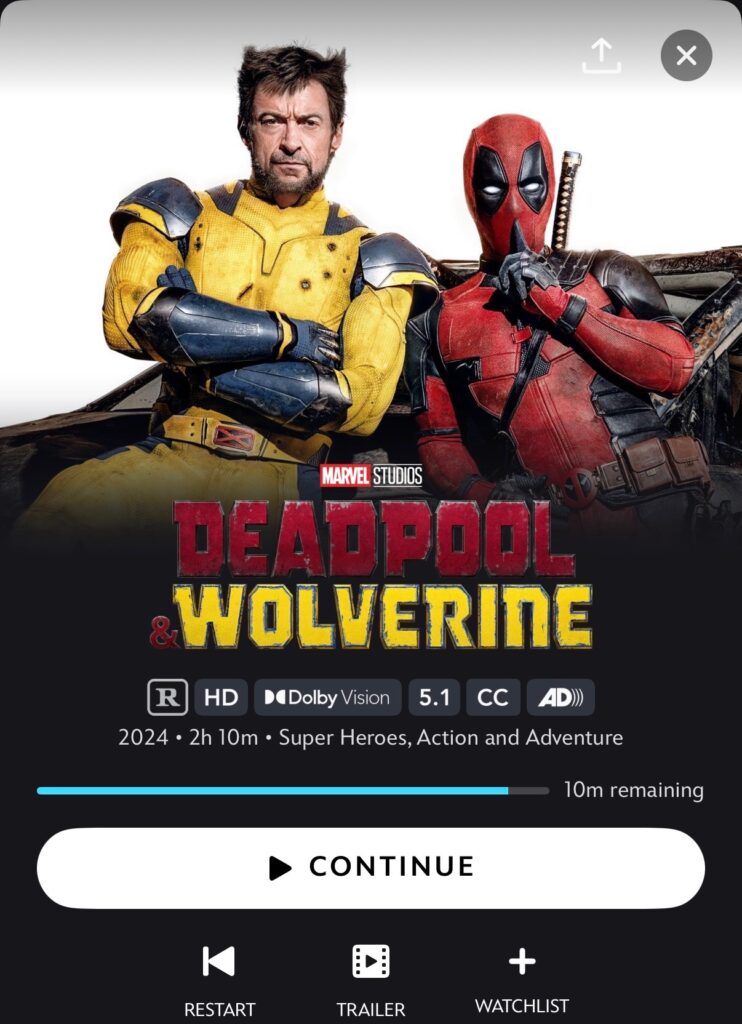
Later, I watched Deadpool & Wolverine. This accounted for over two hours of my media consumption but was purely entertainment rather than information I needed to fact-check.
10:00 p.m. – Instagram
After the movie, I went back on Instagram. Again, the majority of what appeared was sports-related content. It was interesting seeing how consistent my algorithm was throughout the day. Because I regularly interact with sports posts, Instagram continually gives me more baseball, football, fantasy and betting content.
11:00 p.m. – Adrian Peterson Highlights
I finished my night by watching an NFL Throwback video on YouTube titled Adrian Peterson TOO Strong TOO Fast Career Highlights! | NFL Legends. It was about 47 minutes long and showed highlights from throughout his NFL career.
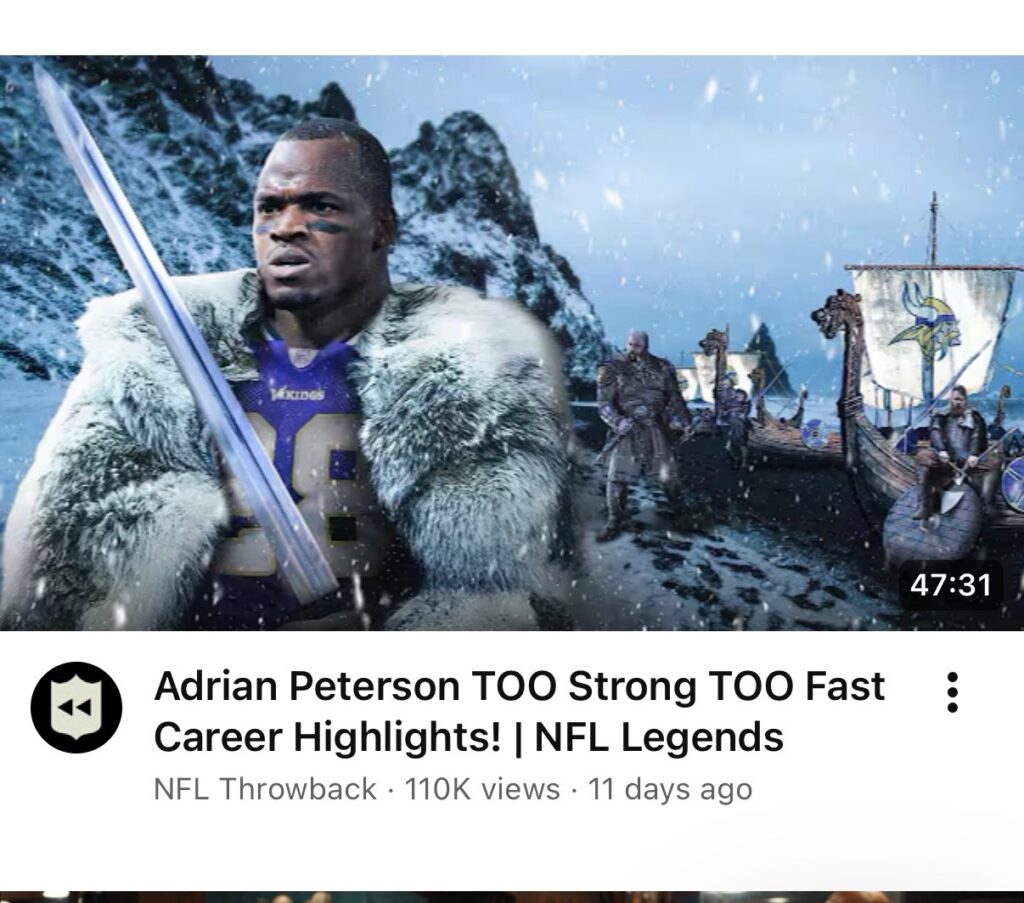
If I wanted to verify statistics mentioned in a highlight video, I could also compare them with the NFL’s official career statistics.
Reflection
The biggest thing I noticed from tracking my media for a full day was how sports-centered my media diet is. Even when I wasn’t intentionally searching for sports, Instagram and other platforms continued recommending baseball, football, fantasy football and gambling content to me.
I actually encountered less obviously false information than I expected. However, I encountered a lot of content where credibility still mattered. Sports betting picks are predictions presented with statistics, fantasy rankings are projections presented as ordered lists, and sportsbook advertisements emphasize their most attractive numbers while putting important conditions in smaller text.
The activity made me realize that questionable content doesn’t always have to be a completely fake story. Sometimes information can technically be true while still being presented in a way that encourages you to interpret it a certain way. Going forward, I would be most likely to fact-check sports betting claims, advertisements and information from accounts I don’t recognize. I would have more initial trust in sources such as ESPN or the NFL, but this activity also showed me that it is still worth comparing information across multiple sources rather than automatically believing something because it looks professional.
Leave a Reply