Category: Uncategorized

  • Before You Repost That Trade Rumor: How Sports Fans Can Spot Fake News Online

    Breaking news or just another fake post?

    Imagine scrolling through X and seeing a post claiming that your favorite NFL team just traded its star quarterback. The post has thousands of likes, an ESPN-style graphic, and a caption saying the deal is official. You immediately send it to your friends, only to find out later that the trade never happened.

    This is exactly the kind of misinformation that sports fans can encounter online. Social media has made sports news faster and more accessible, but it has also made it easier for false rumors, edited screenshots, and impersonator accounts to spread.

    The good news is that you do not have to be a professional journalist to recognize questionable sports information. By learning a few simple verification techniques, fans can become better at separating legitimate breaking news from misleading content.

    Who Is This Project For?

    My intended audience is college-age sports fans between 18 and 24 who regularly use Instagram, TikTok, and X to follow their favorite teams, athletes, and sports reporters.

    I chose this audience because social media is a major part of how younger fans interact with sports. Whether someone is checking injury updates for fantasy football, following NBA trade rumors, or watching highlights on TikTok, information often reaches them through social media before they actively search for it.

    I chose an educational blog post with sports-related examples because it allows me to explain verification techniques in detail while keeping the content relevant to an audience that already consumes sports media. The goal is to teach fans a process they can realistically use during their everyday scrolling.

    1. Why Fake Sports News Spreads So Easily

    Sports fans are emotionally invested in their favorite teams. A surprising trade rumor, controversial referee decision, or major injury announcement can immediately attract attention.

    For example, imagine seeing a post that says:

    “BREAKING: The Lakers have agreed to trade their biggest star in a shocking deal!”

    A fan might repost it immediately because the news is exciting or upsetting. The emotional reaction can become more important than whether the information is accurate.

    This is particularly concerning because social media platforms often reward content that generates engagement. Posts that receive likes, comments, and shares can become more visible, regardless of whether the information is reliable.

    Misinformation does not always have to be completely invented. A misleading sports post might use an old photograph, exaggerate an actual report, or present speculation as a confirmed announcement.

    The important lesson is that popularity does not equal accuracy. A post having thousands of likes does not prove that the information is legitimate.

    2. Check the Original Source

    The first thing sports fans should do when encountering surprising news is investigate where the information originally came from.

    Suppose an Instagram account posts a screenshot claiming that ESPN’s Adam Schefter reported a major NFL trade. Instead of trusting the screenshot, search for the report on ESPN or Schefter’s actual account.

    Ask yourself:

    • Did the reporter actually publish this information?
    • Is the screenshot from the reporter’s real account?
    • Is the post recent, or could it be from an earlier season?
    • Does the original report describe a confirmed event or only a possibility?

    A screenshot can be edited to make it appear that a legitimate reporter said something they never said.

    Even a real screenshot can become misleading when it is separated from its original date or context.

    This technique relates to the SIFT method developed by media-literacy educator Mike Caulfield. SIFT encourages people to stop, investigate sources, find better coverage, and trace information to its original context.

    Learn more about the SIFT verification method.

    3. Watch Out for Fake Reporter Accounts

    Another common problem involves accounts pretending to be legitimate sports reporters or news organizations.

    A fake account might use the same profile picture, name, and branding as a real reporter while changing one character in the username.

    For example, a fictional impersonator might replace the letter “o” with the number “0” in a reporter’s username. At a quick glance, the account could look authentic.

    A professional-looking profile picture or verification symbol should not be treated as proof that an account is trustworthy.

    Before believing a major announcement, investigate the account’s history. Does it regularly publish legitimate reports? Is it linked from the reporter’s employer or official website? Can you find the same announcement through the reporter’s established channels?

    These questions are especially useful during major events like the NFL Draft, NBA free agency, and trade deadlines, when fans are constantly refreshing social media for updates.

    The lesson is simple: check the account, not just the headline.

    4. Use Lateral Reading to Find Better Coverage

    One of the most useful concepts from this class is lateral reading.

    Instead of spending all your time examining one questionable post, open another tab and investigate what other credible sources are reporting.

    For example, if an unfamiliar account claims that an NFL quarterback has suffered a season-ending injury, search for confirmation from ESPN, the Associated Press, the team’s official website, or established reporters covering that team.

    If the injury is real and has been officially confirmed, there may be independent reporting or a statement from the organization.

    However, it is important to recognize that the absence of immediate confirmation does not automatically prove that a report is false. Breaking news sometimes takes time to verify.

    Research from Stanford has shown that professional fact-checkers use lateral reading to evaluate online information. Rather than relying only on how professional a website looks, they investigate the source using information from other websites.

    Stanford University — Judging Fact From Fiction Online

    This is a particularly useful strategy for sports fans because it can take less than a minute to search for another credible report.

    5. Learn the Difference Between Rumors and Confirmed News

    Not every inaccurate sports prediction is misinformation. Sports reporters, analysts, and fans regularly discuss possibilities that never happen.

    For example, there is an important difference between these statements:

    Rumor: “The Warriors are reportedly interested in trading for a star player.”

    Confirmed news: “The Warriors have officially completed a trade for the player.”

    The first statement describes reported interest, while the second claims an actual transaction has occurred.

    A misleading social media account might take a report about potential trade discussions and turn it into a headline claiming that the trade is already finalized.

    The same problem can happen with injury information. A player being listed as questionable does not mean they have officially been ruled out.

    When checking sports information, pay attention to words such as “reportedly,” “considering,” “expected,” and “confirmed.”

    These words can completely change the meaning of a report.

    6. Why Sports Fans Should Care

    Some people might argue that fake sports news is not particularly serious compared with misinformation about health, politics, or elections.

    However, sports misinformation can still have consequences.

    False injury reports can influence fantasy football decisions. Fake trade announcements can damage the credibility of reporters and confuse fans. Misleading information about athletes can also contribute to unfair criticism or online harassment.

    For people who follow sports betting, inaccurate lineup or injury information can even affect financial decisions.

    More importantly, learning to verify sports information builds habits that can transfer into other parts of life.

    If someone learns to check the original source of an NFL trade rumor, that same person can apply the technique when encountering a questionable political headline, health claim, or AI-generated video.

    Sports provide an accessible environment for practicing digital literacy because fans already have an interest in the subject.

    7. A Four-Step Routine Every Sports Fan Can Use

    The next time you encounter surprising sports news, remember these four steps:

    Step 1: Stop before sharing. Do not immediately repost something just because it makes you excited, angry, or surprised.

    Step 2: Investigate the account. Make sure the information comes from a legitimate reporter, team, league, or news organization.

    Step 3: Find independent coverage. Search for the same claim using other reliable sources rather than relying on one screenshot or social media post.

    Step 4: Trace the information to its original context. Check the date, original wording, and whether the claim is confirmed or simply speculation.

    These steps are adapted from the SIFT approach and can help fans make more informed decisions about what they believe and share.

    Conclusion: Be a Fan, Not a Source of Misinformation

    Social media has changed the way sports fans receive information. News travels faster than ever, but the pressure to be first can also make misleading content more appealing.

    The goal of this project is not to make sports fans distrust every reporter or question every post they encounter. Instead, it is to encourage a few simple habits that make misinformation less likely to spread.

    Checking an original source, investigating an account, and comparing credible coverage are all realistic actions that fans can take without spending hours researching a single claim.

    I believe these strategies are especially effective for younger sports fans because they fit into the platforms and routines they already use.

    The next time a shocking trade rumor or injury announcement appears on your feed, remember that being the first person to share something is not as important as making sure it is accurate.

    Before you repost, verify.

    References

    1. Stanford University. (2020). Judging fact from fiction online.
    2. Caulfield, M. The SIFT method: Evaluating web sources.
    3. Michigan State University. Evaluating online information with SIFT.
    4. Santa Monica College. The SIFT method.
  • How Instagram and TikTok Are Fighting Misinformation

    Social media platforms have made it possible for information to reach millions of people within hours or even minutes. Unfortunately, false information can spread just as quickly. Instagram and TikTok are two platforms I use regularly, and both rely heavily on visual content and recommendation algorithms. A misleading video, screenshot, or graphic can therefore reach people who never intentionally searched for the topic. Both platforms have developed systems for dealing with misinformation, but they take somewhat different approaches. After researching their current policies, I found that both platforms have useful strategies, although there are still areas where their efforts could be improved.

    Instagram’s Approach to Misinformation

    Instagram is owned by Meta, which also operates Facebook and Threads. One of the biggest recent changes to Meta’s misinformation strategy was its decision to end its traditional third-party fact-checking program in the United States. In 2025, Meta began replacing that system with Community Notes on Facebook, Instagram, and Threads.

    Community Notes lets users add context to a post that may be misleading. Contributors may write notes and add supporting sources, also rate notes written by other contributors. Meta says a note must be agreed upon by people who have previously disagreed in their ratings before it becomes public. But the goal is to prevent one group or perspective from setting the standard for what constitutes misleading.

    One benefit of Community Notes is that they can provide context rather than simply telling users what they should or should not believe. A note can give users another source to examine and allow them to investigate a claim themselves. This relates to lateral reading because users are encouraged to look beyond the original post and consider outside evidence.

    However, I think there is also an obvious weakness. Instagram content can spread incredibly quickly. By the time contributors write and approve a Community Note, a misleading Reel or post could already have thousands or even millions of views. Meta has also said that receiving a Community Note does not automatically cause a post’s distribution to be reduced.

    Instagram also addresses AI-generated and manipulated media. Meta uses “AI info” labels on some content when it detects technical indicators that AI was used or when users disclose the use of AI. This is becoming increasingly important because realistic AI-generated images, audio, and videos can make it harder for an average social media user to determine what is authentic.

    I think Instagram could improve its approach by making context and source information even more noticeable. Community Notes are useful, but the system still depends on contributors responding after questionable information has appeared. Instagram could also make it easier to trace reposted images and videos to their original source. This would encourage users to investigate where information actually came from rather than automatically trusting a screenshot or repost.

    TikTok’s Approach to Misinformation

    TikTok also uses several methods to address misinformation, including moderation, labels, recommendation restrictions, fact-checking, and media-literacy efforts. TikTok’s policies allow it to remove harmful misinformation in certain areas, while other questionable content can be restricted from recommendation. The company has also worked with independent fact-checking organizations to evaluate claims.

    One part of TikTok’s approach that I find particularly interesting involves the For You feed. TikTok has explained that when content is undergoing fact-checking or a claim cannot be substantiated, the content can become ineligible for recommendation in the For You feed. TikTok has also used warning prompts designed to make users reconsider sharing unverified content.

    TikTok — How TikTok Counters

    I think this approach is important because of how TikTok actually works. From my own experience using the platform, I rarely search for every video that appears on my screen. Most of the content I see is recommended through the For You feed. This means TikTok’s algorithm has significant influence over which information gets attention. Limiting the recommendation of questionable content while it is being investigated could reduce the number of people exposed to it.

    TikTok has also introduced Footnotes, a crowdsourced feature that allows eligible contributors to add additional context to videos. Similar to Meta’s Community Notes, TikTok’s system looks for agreement among contributors with different perspectives before a footnote becomes visible. Importantly, TikTok has presented Footnotes as an additional tool rather than a complete replacement for its existing fact-checking and moderation systems.

    TikTok — Footnotes in the United States

    TikTok still faces many of the same problems as Instagram. A false or misleading video can spread extremely quickly, while fact-checkers and contributors need time to investigate it. The massive amount of content uploaded to TikTok also makes it unrealistic for human moderators to evaluate every factual statement.

    One thing I would improve is to put source information more directly into the viewing experience. For example, videos making factual claims about health, major breaking news or other important topics could offer a simple way for users to see relevant authoritative information. TikTok could also put in place stronger prompts before users repost content that is under review or has been identified as unverified. If we can set up a few seconds of friction, maybe someone will think twice before immediately sharing dubious information.

    Comparing the Two Platforms

    In comparing Instagram and TikTok, what stood out to me is that misinformation policies aren’t simply about deleting posts. The two companies are also testing crowdsourced context systems, but they also differ in their approach to distribution of questionable information.

    Community Notes contributors are more central to Meta’s current U.S. strategy than its earlier third-party fact-checking system. Like Facebook and Twitter, TikTok also uses crowdsourced Footnotes, but it has stuck to the narrative that independence testing, moderation, and recommendation restrictions are part of its bigger approach.

    This distinction matters because recommendation algorithms can influence whether misinformation reaches 100 people or one million people. In my opinion, simply attaching context to a misleading post may not always be enough if an algorithm continues recommending that post to large numbers of users.

    Conclusion

    I’ve done some research on Instagram and Tiktok I think one of the biggest challenges is speed. Misinformation can travel faster than fact-checkers, moderators or Community Notes contributors can respond. Both platforms have developed tools that can add context, detect manipulated content and limit some forms of misinformation, but none of these approaches can flag every misleading post.

    A stronger approach would integrate reliable external information, crowdsourced context, less amplification of questionable data by algorithms, and media literacy education. Platforms should also make it easier for people to find and investigate original sources, rather than asking them to either trust a warning label blindly or figure everything out on their own.

    Users still have responsibility for deciding what they believe and share, but platforms determine much of what appears in front of those users in the first place. Because of that, the design of recommendation systems and misinformation policies can have a major effect on what information spreads. Instagram and TikTok’s current efforts show that platforms can intervene, but continuing to improve the speed, transparency, and visibility of those interventions will be important as misinformation becomes more difficult to recognize.

  • Fact-Checking the Claim That Caffeine Dehydrates You

    I’ve heard it many times, especially on social media and in conversations about working out and hydration, that caffeinated drinks like coffee and energy drinks dehydrate you. I thought at first the claim might be true because caffeine can make people pee more often. However, that doesn’t automatically mean that a caffeinated beverage causes a person to lose more fluid than they drank. This was a good claim to evaluate using the SIFT and lateral-reading techniques from this module, as hydration impacts exercise, health and everyday decisions.

    Step 1: Stop and Identify the Claim

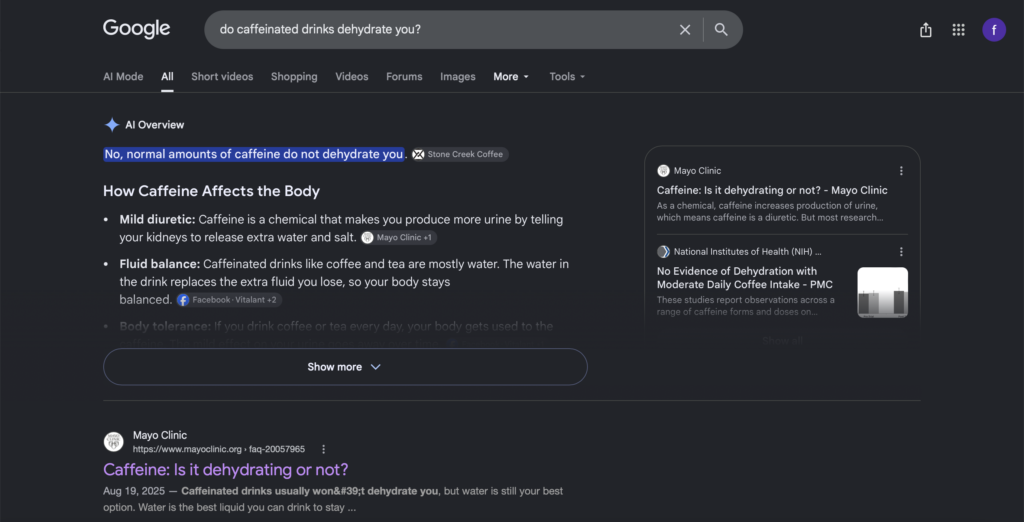
    The first step I took was to stop before automatically accepting the claim. The specific claim I wanted to investigate was: “Caffeinated drinks dehydrate you.” One red flag was how absolute the statement is. It does not mention how much caffeine someone consumes, whether the person regularly consumes caffeine, or how much fluid is actually in the beverage. Those details could make a major difference. I started with a broad Google search to see what kinds of sources and explanations appeared before deciding what evidence to trust.

    Step 2: Investigate the Source

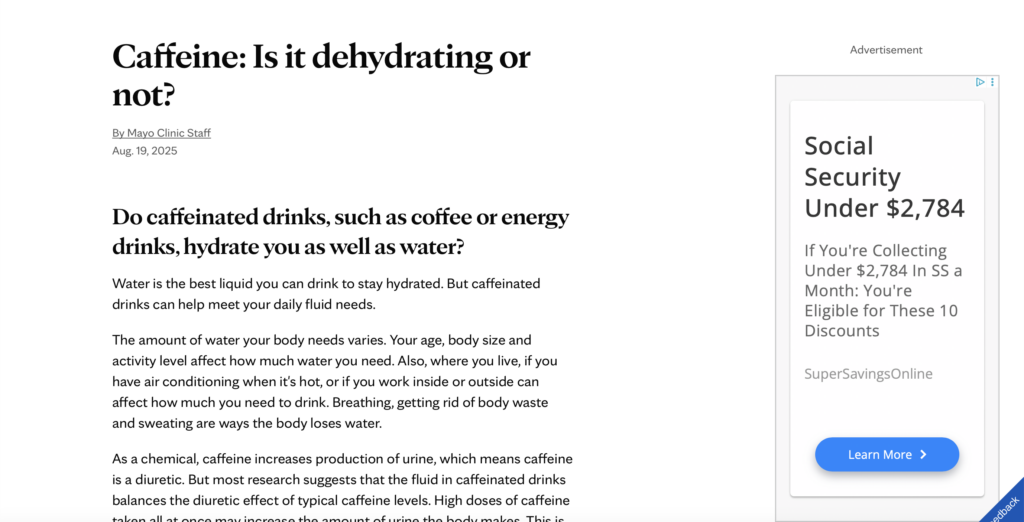
    I didn’t accept the summary of the search on face value, nor did I click on some random result, but looked for a source with health expertise. According to the Mayo Clinic, caffeine is a diuretic, so it can make you produce more urine, but caffeinated beverages can also count toward your daily fluid intake. The page then goes on to explain that the fluid in caffeinated drinks usually counteracts the diuretic effect of normal levels of caffeine. This was an important piece of context I got from this: caffeine can increase urination without necessarily causing dehydration.

    Step 3: Find Better Coverage

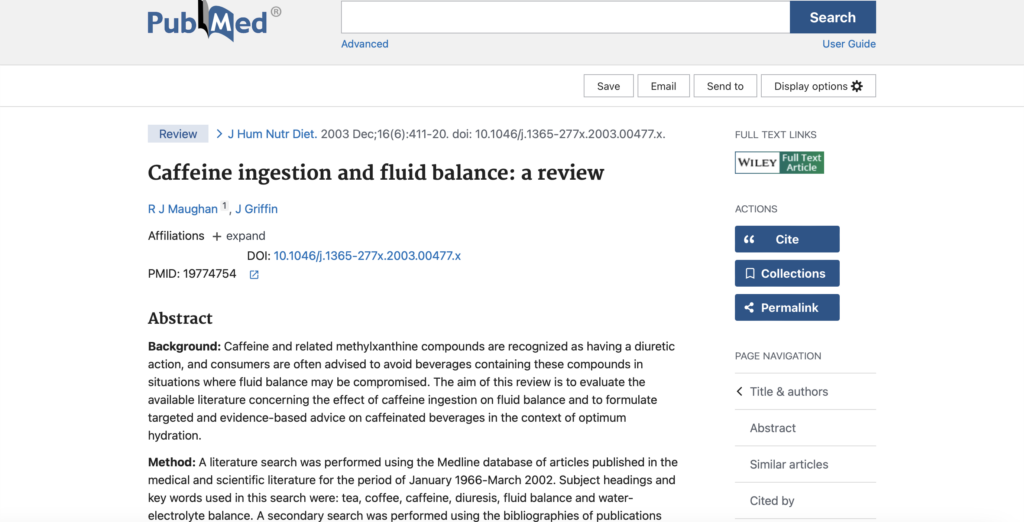
    I didn’t want to trust a single health website, even a reputable one, so I did some lateral reading and looked for scientific research. I found a review indexed in Pubmed: Caffeine ingestion and fluid balance: a review. The review looked at research on caffeine, diuresis, fluid balance and hydration. This was helpful because it took the process of verification out of a general health article, and into the research evidence behind the claim. The review concludes that large amounts may have a diuretic effect, particularly in individuals not used to caffeine, but normal servings of caffeine-containing drinks do not seem to produce a fluid deficit greater than the fluid taken in.

    Step 4: Check Additional Evidence

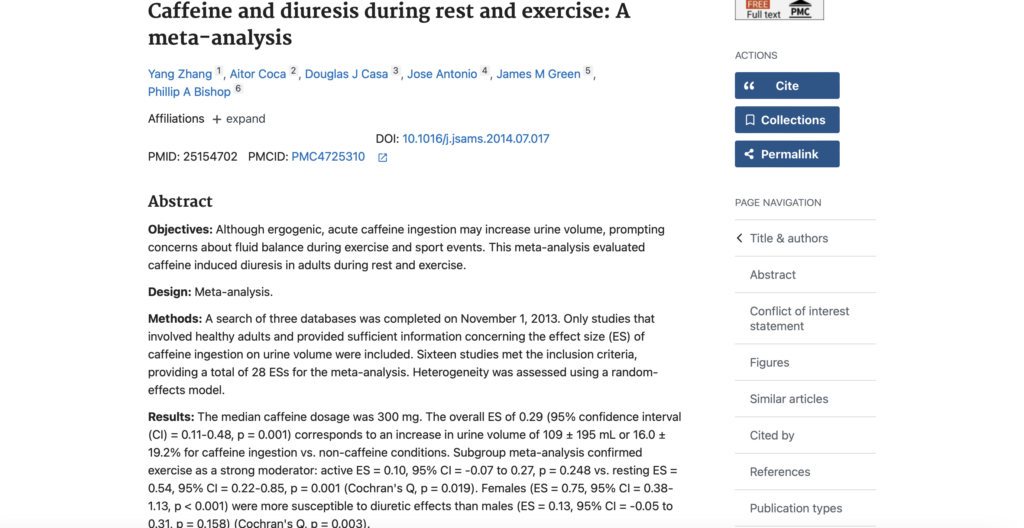
    I went to find more research instead of stopping when I found evidence that supported one conclusion. I came across a meta-analysis in PubMed, “Caffeine and Diuresis During Rest and Exercise.” It pooled data from 16 studies and looked at the effect of caffeine on urine output in adults. In general, the study showed a small diuretic effect, but this effect was much greater at rest than during exercise. So it was important to check another study, because if you just had one source you might get confirmation bias. The fact that several sources pointed in the same direction made this conclusion more convincing.

    Step 5: Final Assessment

    After checking these sources, I would rate the original claim as “misleading” rather than “completely false.” So there is some truth to the statement . Caffeine does have a diuretic effect, particularly at higher doses. But the term “dehydrate you” needs some important context. There is evidence that the water in regular drinks containing caffeine does help to keep you hydrated and that drinking the usual amount of caffeine does not always lead to an overall loss of fluid from the body. That is different than saying every caffeinated drink causes dehydration . Water is still a good choice for hydration and too much caffeine can have other effects .

    This process showed me why it is important to investigate claims that sound believable instead of only obviously false claims. Misinformation can take one true fact, such as caffeine increasing urine production, and remove the context needed to understand what that fact actually means. Using SIFT and lateral reading helped me move away from a simple yes-or-no search and instead investigate the source, find better coverage, and compare scientific evidence. Taking a few extra minutes to do those steps can prevent us from believing or sharing an oversimplified claim.

    Sources

    Mayo Clinic — Caffeine: Is it dehydrating or not?

    PubMed — Caffeine ingestion and fluid balance: a review

    PubMed — Caffeine and diuresis during rest and exercise: A meta-analysis

  • Evaluating Misinformation Education Tools: RumorGuard and Bad News

    RumorGuard

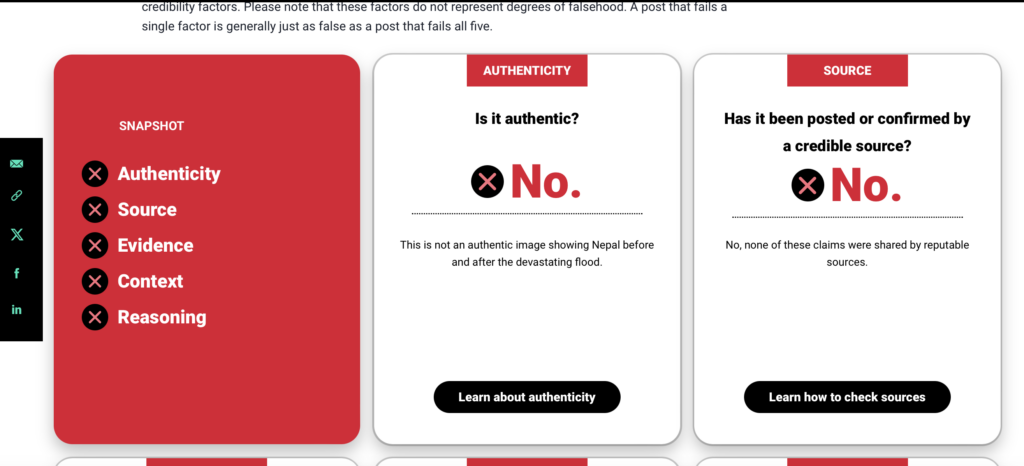
    The News Literacy Project developed RumorGuard, an interactive tool that teaches users how to assess online claims using actual instances of viral misinformation. The five criteria of credibility—source, evidence, context, reasoning, and authenticity—are applied to each rumor. Users can open brief lessons that explain how to check those factors themselves after scrolling through an example to see which factors the claim fails. The objective is to teach users a method they can use whenever they come across questionable material on the internet, rather than just telling them if a particular post is false.

    RumorGuard example showing the Authenticity and Source credibility checks.

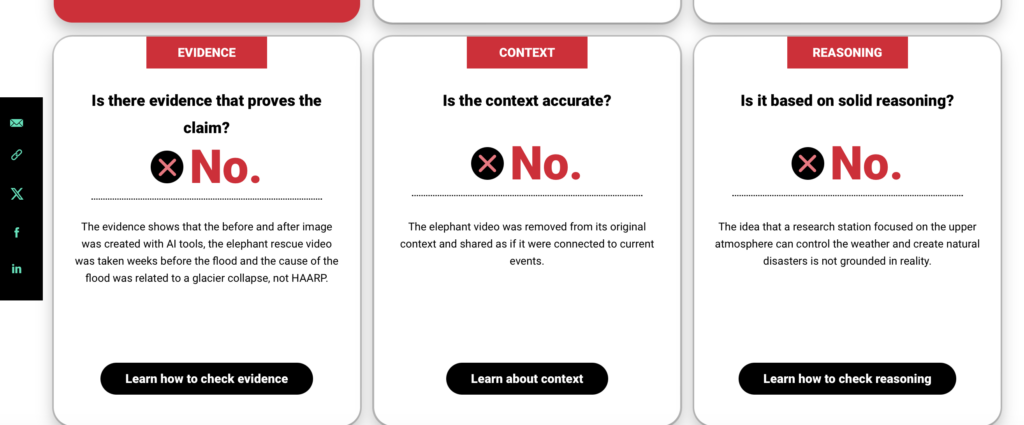
    I believe RumorGuard works well because it provides users with a straightforward checklist rather than requiring them to commit specific fact-checks to memory. All five criteria were not met by the example I looked at. The tool clarified that the material had been taken out of its original context, the image was not authentic, the claims were not supported by reliable sources, the evidence denied the claims, and the reasoning was unfounded. Because the same questions can be used for posts on TikTok, Instagram, X, and other platforms, this makes the lesson applicable. The method’s dependence on users slowing down long enough to look into a claim is a downside. People might react or share before doing that in a social media feed that moves quickly. Even so, RumorGuard provides a useful routine for becoming more skeptical without assuming that everything online is false.

    RumorGuard’s Evidence, Context, and Reasoning checks.

    Resource: RumorGuard – About and How It Works

    Bad News

    The second tool I used was Bad News, a browser game that teaches misinformation from the opposite perspective. Rather than fact-checking other people’s content, the player creates fake news and seeks to attract followers while retaining enough credibility to retain viewers. Impersonation, emotional language, conflict, conspiracy theories, discrediting opponents, and trolling are the six common manipulation techniques taught in the game. Players make decisions and can see right away how those decisions impact credibility and followers.

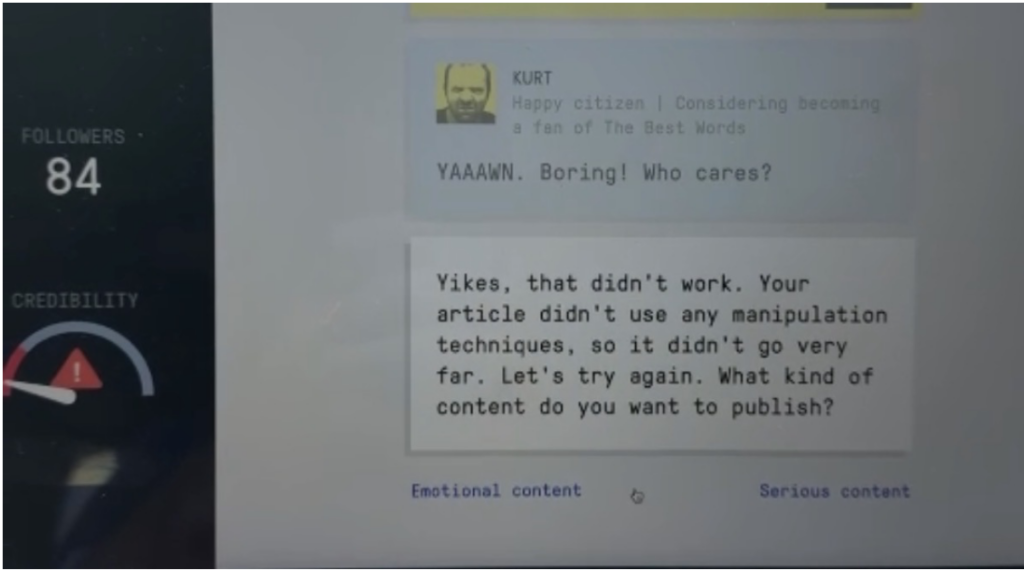
    Bad News explaining that content without manipulation did not spread and offering an emotional-content strategy.

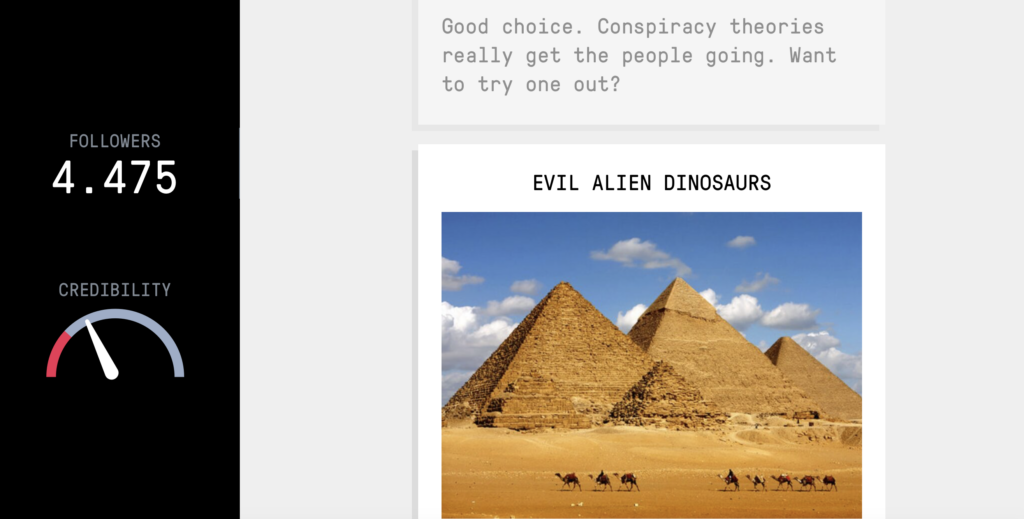
    I found this approach especially effective because it shows why misinformation can spread rather than simply saying that it does. For example, after I chose content that did not use manipulation, the game told me that the article did not go very far and encouraged me to try emotional content. Later, the game explicitly said that conspiracy theories “really get the people going,” while my account had reached 4,475 followers. Seeing the follower count rise makes the incentive structure behind sensational misinformation much easier to understand.

    Bad News demonstrating the conspiracy-theory strategy with 4,475 followers.

    This kind of game-based approach is supported by research. With roughly 15,000 participants, Roozenbeek and van der Linden examined Bad News and discovered evidence that gaming enhanced people’s capacity to identify and fight off common misinformation tactics. The concept is comparable to psychological inoculation because exposing individuals to mild instances of manipulation can help with their later recognition of the tactics. I believe interactive tools and educational games are beneficial because they allow participants to practice skills rather than just read about them. Additionally, they are more interesting than a typical lecture. But games by themselves won’t get rid of false information. They are most effective when used in conjunction with fact-checking, responsible journalism, media literacy training, and improved user behavior prior to liking, believing, or sharing questionable material.

    Resources: Play Bad News | Roozenbeek & van der Linden (2019) research study

  • 24 Hours of my Media Consumption

    I kept a record of the media I consumed in the course of one typical day in a media diary. I expected most of my media consumption to be sports and entertainment related, but paying closer attention made me realize how often I come across information that I normally accept without really questioning it.

    9:30 a.m. – X and Sports Betting

    I woke up around 9:30 and almost immediately checked X on my phone. A lot of the content I look at on X is sports related, especially sports betting. I looked through different picks and ended up taking the over on the Cubs game.

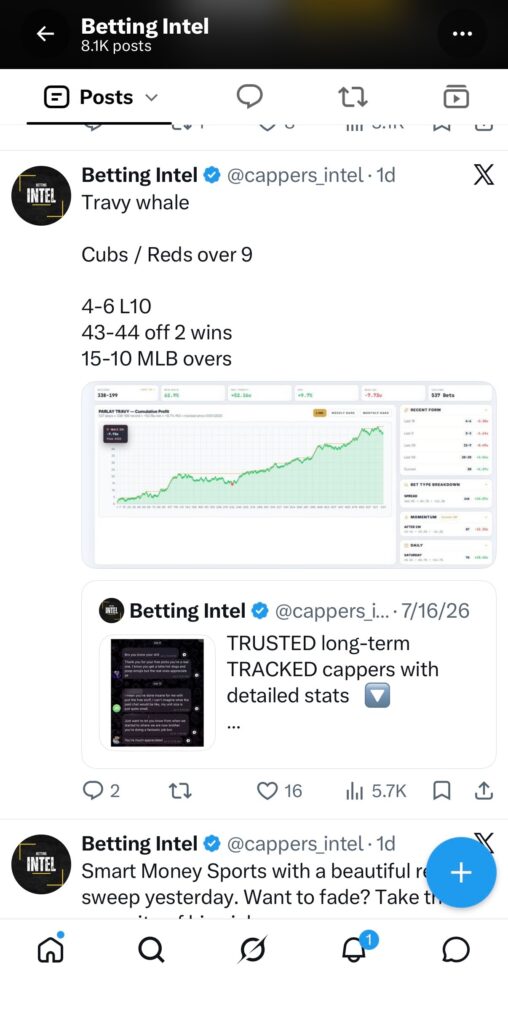
    One of the accounts I came across was Betting Intel, which reposts picks from different sports bettors along with their records and statistics. One post showed a bettor’s Cubs/Reds over pick along with records such as “15-10 MLB overs.”

    This was one of the first examples of questionable information I noticed. It isn’t necessarily misinformation, but there is a credibility issue because I am trusting that the records and statistics shown in the post are accurate. Normally, I would see a good record and use that as part of deciding whether I like a bet without researching how the record was calculated. A winning percentage also doesn’t guarantee that the person’s next prediction will be correct.

    10:00 a.m. – Instagram

    After checking X, I spent about 30 minutes scrolling through Instagram. My algorithm is extremely sports-heavy. I saw baseball posts, college football content, fantasy football information and sports betting advertisements.

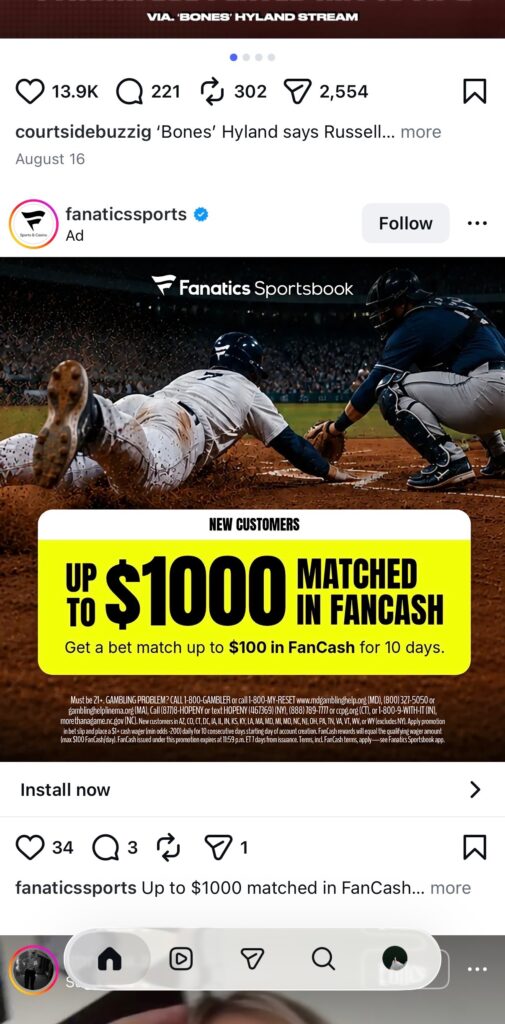
    One thing that stood out was an advertisement from Fanatics Sportsbook advertising “up to $1,000 matched in FanCash.”

    At first glance, “$1,000 matched” sounds almost like a customer is simply being given $1,000. However, the advertisement itself says it is a bet match of up to $100 in FanCash for 10 days. I looked further into how FanCash works. According to Fanatics’ terms, FanCash isn’t simply the same thing as receiving $1,000 in withdrawable cash. FanCash has specific redemption rules and cannot simply be redeemed directly for cash. 

    This doesn’t mean the advertisement is false, but it showed me why reading beyond the largest words in an advertisement is important. The “$1,000” is designed to grab your attention.

    11:00 a.m. – Walmart and the Gym

    I went to Walmart to buy an energy drink and laundry detergent and then went to the gym. I wasn’t consuming much media during this period besides occasionally checking my phone and listening to music.

    1:30 p.m. – TikTok and Email

    After the gym, I went home, showered and made two burgers. While eating and relaxing, I scrolled through TikTok. Like Instagram, a lot of what TikTok recommends to me is sports, fitness, humor and other entertainment content. I also checked my email afterward. I realized that short-form apps are probably where I pay the least attention to credibility because I am scrolling quickly rather than stopping to investigate every claim I see.

    3:00 p.m. – Wii Bowling

    I played a few games of Wii Bowling. This was entertainment media, but unlike social media, there wasn’t really information being presented to me that I needed to determine was credible.

    4:00 p.m. – Fantasy Football Research

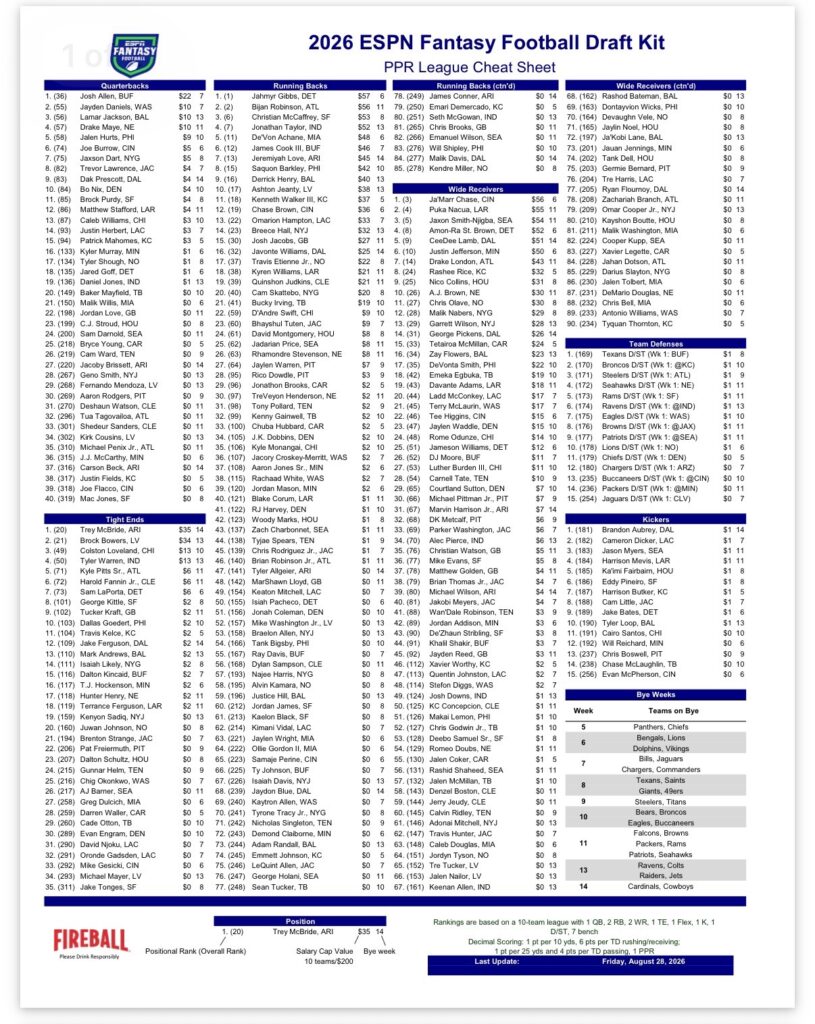
    I spent about an hour researching fantasy football rankings because I was preparing to draft my fantasy team. One of the resources I looked at was ESPN’s 2026 Fantasy Football Draft Kit.

    Fantasy rankings are another interesting example of information that can look more factual than it really is. The rankings give players exact positions, but they are ultimately predictions about what will happen during the upcoming season. Injuries, playing time and unexpected performances can completely change them. Because of that, I compared information rather than assuming one ranking sheet could tell me exactly who would be best.

    6:00 p.m. – Fantasy Football Draft

    After researching players, I drafted my fantasy football team. During the draft I continued looking at rankings and player information when deciding who to select.

    7:30 p.m. – Deadpool & Wolverine

    Later, I watched Deadpool & Wolverine. This accounted for over two hours of my media consumption but was purely entertainment rather than information I needed to fact-check.

    10:00 p.m. – Instagram

    After the movie, I went back on Instagram. Again, the majority of what appeared was sports-related content. It was interesting seeing how consistent my algorithm was throughout the day. Because I regularly interact with sports posts, Instagram continually gives me more baseball, football, fantasy and betting content.

    11:00 p.m. – Adrian Peterson Highlights

    I finished my night by watching an NFL Throwback video on YouTube titled Adrian Peterson TOO Strong TOO Fast Career Highlights! | NFL Legends. It was about 47 minutes long and showed highlights from throughout his NFL career.

    If I wanted to verify statistics mentioned in a highlight video, I could also compare them with the NFL’s official career statistics. 

    Reflection

    The biggest thing I noticed from tracking my media for a full day was how sports-centered my media diet is. Even when I wasn’t intentionally searching for sports, Instagram and other platforms continued recommending baseball, football, fantasy football and gambling content to me.

    I actually encountered less obviously false information than I expected. However, I encountered a lot of content where credibility still mattered. Sports betting picks are predictions presented with statistics, fantasy rankings are projections presented as ordered lists, and sportsbook advertisements emphasize their most attractive numbers while putting important conditions in smaller text.

    The activity made me realize that questionable content doesn’t always have to be a completely fake story. Sometimes information can technically be true while still being presented in a way that encourages you to interpret it a certain way. Going forward, I would be most likely to fact-check sports betting claims, advertisements and information from accounts I don’t recognize. I would have more initial trust in sources such as ESPN or the NFL, but this activity also showed me that it is still worth comparing information across multiple sources rather than automatically believing something because it looks professional.

  • Welcome to my Media Blog

    Welcome to my blog for Misinformation and Society. This site will feature my class work and reflections on how media influences the information people encounter every day. Throughout the semester, I’ll explore misinformation, social media, news, and media literacy.