I’ve heard it many times, especially on social media and in conversations about working out and hydration, that caffeinated drinks like coffee and energy drinks dehydrate you. I thought at first the claim might be true because caffeine can make people pee more often. However, that doesn’t automatically mean that a caffeinated beverage causes a person to lose more fluid than they drank. This was a good claim to evaluate using the SIFT and lateral-reading techniques from this module, as hydration impacts exercise, health and everyday decisions.
Step 1: Stop and Identify the Claim
The first step I took was to stop before automatically accepting the claim. The specific claim I wanted to investigate was: “Caffeinated drinks dehydrate you.” One red flag was how absolute the statement is. It does not mention how much caffeine someone consumes, whether the person regularly consumes caffeine, or how much fluid is actually in the beverage. Those details could make a major difference. I started with a broad Google search to see what kinds of sources and explanations appeared before deciding what evidence to trust.
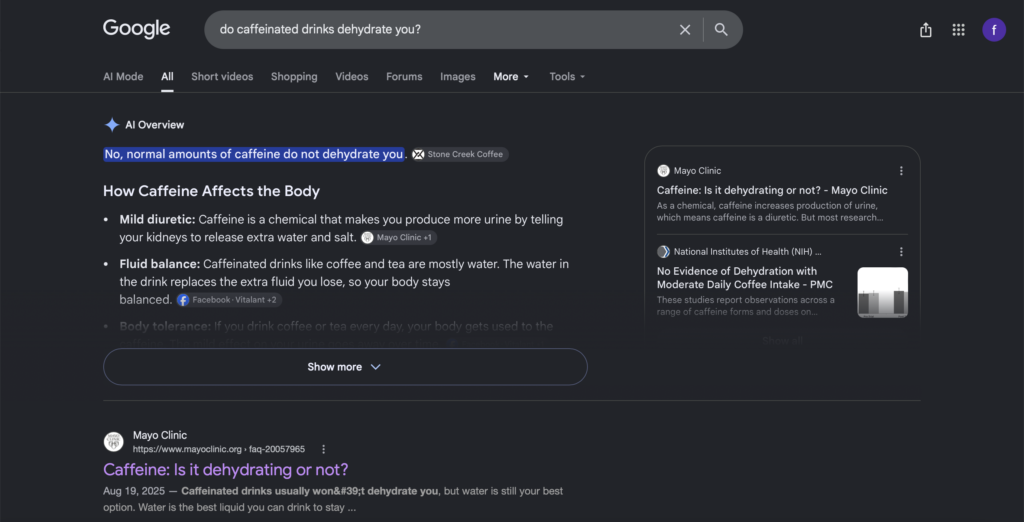
Step 2: Investigate the Source
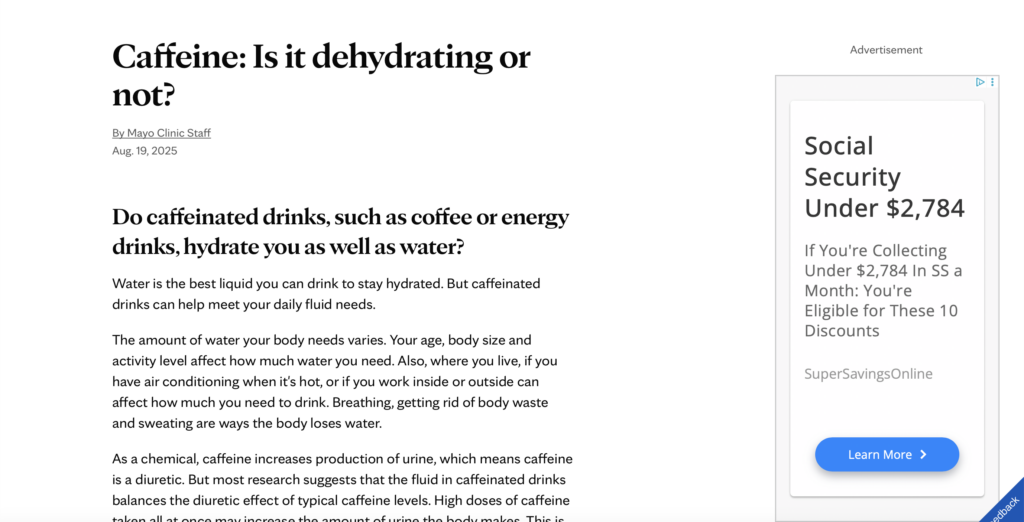
I didn’t accept the summary of the search on face value, nor did I click on some random result, but looked for a source with health expertise. According to the Mayo Clinic, caffeine is a diuretic, so it can make you produce more urine, but caffeinated beverages can also count toward your daily fluid intake. The page then goes on to explain that the fluid in caffeinated drinks usually counteracts the diuretic effect of normal levels of caffeine. This was an important piece of context I got from this: caffeine can increase urination without necessarily causing dehydration.
Step 3: Find Better Coverage
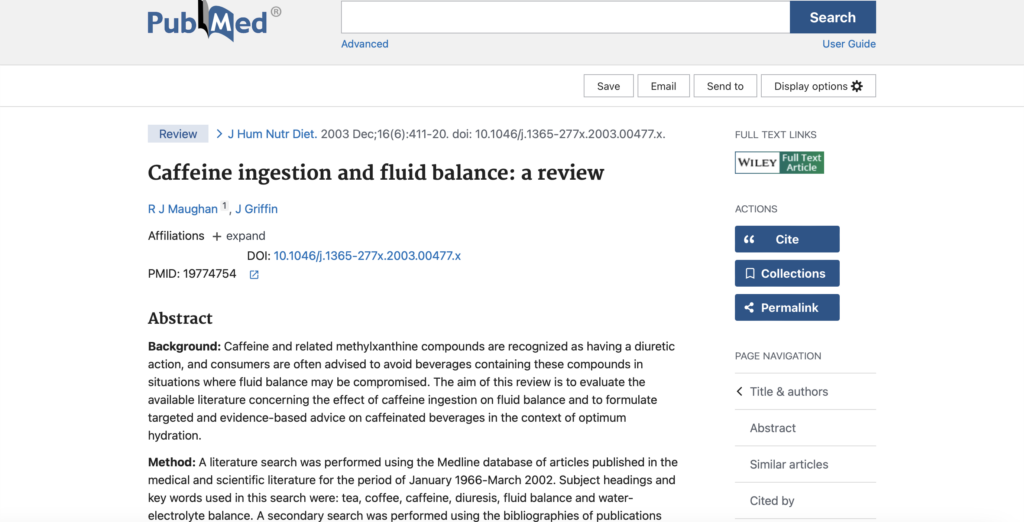
I didn’t want to trust a single health website, even a reputable one, so I did some lateral reading and looked for scientific research. I found a review indexed in Pubmed: Caffeine ingestion and fluid balance: a review. The review looked at research on caffeine, diuresis, fluid balance and hydration. This was helpful because it took the process of verification out of a general health article, and into the research evidence behind the claim. The review concludes that large amounts may have a diuretic effect, particularly in individuals not used to caffeine, but normal servings of caffeine-containing drinks do not seem to produce a fluid deficit greater than the fluid taken in.
Step 4: Check Additional Evidence
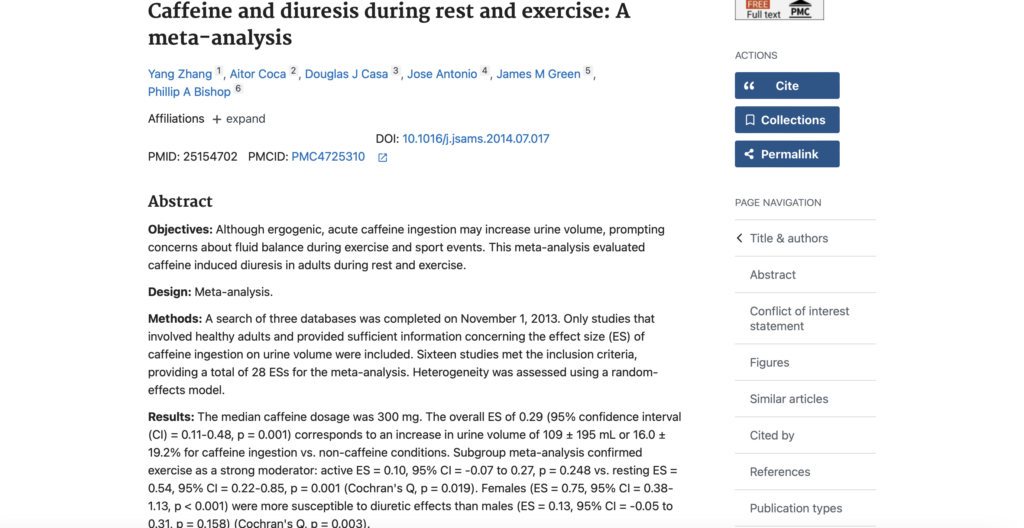
I went to find more research instead of stopping when I found evidence that supported one conclusion. I came across a meta-analysis in PubMed, “Caffeine and Diuresis During Rest and Exercise.” It pooled data from 16 studies and looked at the effect of caffeine on urine output in adults. In general, the study showed a small diuretic effect, but this effect was much greater at rest than during exercise. So it was important to check another study, because if you just had one source you might get confirmation bias. The fact that several sources pointed in the same direction made this conclusion more convincing.
Step 5: Final Assessment
After checking these sources, I would rate the original claim as “misleading” rather than “completely false.” So there is some truth to the statement . Caffeine does have a diuretic effect, particularly at higher doses. But the term “dehydrate you” needs some important context. There is evidence that the water in regular drinks containing caffeine does help to keep you hydrated and that drinking the usual amount of caffeine does not always lead to an overall loss of fluid from the body. That is different than saying every caffeinated drink causes dehydration . Water is still a good choice for hydration and too much caffeine can have other effects .
This process showed me why it is important to investigate claims that sound believable instead of only obviously false claims. Misinformation can take one true fact, such as caffeine increasing urine production, and remove the context needed to understand what that fact actually means. Using SIFT and lateral reading helped me move away from a simple yes-or-no search and instead investigate the source, find better coverage, and compare scientific evidence. Taking a few extra minutes to do those steps can prevent us from believing or sharing an oversimplified claim.
Sources
Mayo Clinic — Caffeine: Is it dehydrating or not?
PubMed — Caffeine ingestion and fluid balance: a review
PubMed — Caffeine and diuresis during rest and exercise: A meta-analysis
Leave a Reply